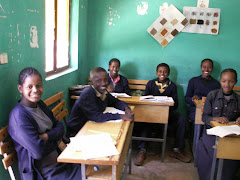
The journey began at 5:30 A.M. in Addis Ababa Ethiopia. The taxi arrived and I got in. Daylight was yet to arrive in the capitol city and the streets were nearly deserted. Daniel, my interpreter for the day introduced me to the driver and seventeen year old Zerihun who I had not previously met and whose home in a remote village we were going to visit. He and his brothers have lived alone since their parents died seven years before.
We drove through the Merkato, purported to be the largest open market in Africa. The darkness was palpable. It was an eerie feeling to see the paper and trash littered street empty except for a stray dog scavenging and trucks parked along the side.
At the bus “station” it was different. Hordes of people were milling about, some shouting above the din of diesel engines which were belching the exhaust smoke that created an enveloping cloud.
We were placed on one bus, then another. I could not understand what was happening but interpreter Daniel did his job well and finally the last bus we boarded lurched onto the street and began to climb out of the valley into the emerging light. Thankfully it was going in the right direction.
Two and a half hours of driving along the twisting turning mountain road we arrived at the village Debre Tsigie and went into a dingy little restaurant where Zerihun and Daniel ate breakfast. I would not eat in that place!
Our trek to the village began downhill on a lava rock strewn road that soon became a track and then, before we reached the valley floor disappeared. For an hour and a half we walked. We skirted fields of wheat, beans and maize (corn). At times the terrain was marshy and our shoes sank into the muck.
Half way across the valley was a big two lane concrete bridge. No road, just a bridge complete with concrete rails.
I could see a person in the distance who was wearing a red coat watching us. He began to draw near and soon was following a few steps behind as we traversed the valley and climbed the steep slope towards our destination, a series of low stone walled compounds at the top of a hill. He was a boy, perhaps ten years old, a silent companion who chewed on a broken twig and smiled a shy friendly smile.
The house was a square mud hut with a tall thatched, conical roof, called a tukul. The walls had been recently re-covered with a coat of fresh mud, cow dung and straw veneer inside and out. There was a wooden door which could be locked but no windows.
The interior was cool and dark and the floor was earth, swept clean, and bumpy from protruding rocks. A fresh pile of sleeping straw was stacked in one corner and in another, perched on the low rock foundation, was a wooden box that had a closed, hinged top. A few bottles and personal items sat along the ledge and in another corner, near the door, were bags of grain and a round, broken injera basket.
Zerihun brought out some animal skins, spread them on the ledge and there we sat and talked.
As politely as I could I refused a drink of milk and explained: “I have been sick” which was true. Sometimes it is a bit of an adventure to eat the local food.
There is another “house” where cooking is done and a smaller one made only of poles placed vertically, spaced close together to protect the domestic animals from the hyenas.
I presented gifts for Zerihun and Dogachow, his twelve year old brother and Wondeson, fifteen, who was in a distant part of the country “following the harvest.” He works with a sickle, squatted down. The crop is cut by hand, dried, and threshed by walking animals round and round to separate the grain, beans or peas from the hulls, after which it is tossed into the air for the wind to blow away the chaff.
I met some neighbors though we could not converse, photographed the local children, the house and the animals.
Too soon we needed to leave. The buses don’t wait.
We walked another hour and a half back to the village and located a bus which was traveling in the right direction, sat inside and said our goodbyes to Zerihun. When he turned to leave he was stifling back tears. He has been head of household since age ten we were his first non resident visitors and I was the first farangi to have ever been there .
God Bless whoever has helped them.
Orphans of Debre Tsige